
7 Benefits of Engineered Wood for Home and Commercial Interiors
Choosing the right material is one of the most important decisions when planning furniture, wardrobes, kitchens, partitions or commercial interiors. Engineered wood has become an important material category because it can offer consistent characteristics, design flexibility and a range of options for different applications.
Unlike solid timber, engineered wood is manufactured by processing wood fibres, veneers, strands or other wood components into products designed for specific uses. The category includes products such as plywood, OSB, laminated veneer lumber and other structural wood products.
For homeowners, architects, interior designers and contractors, understanding engineered wood products can make material selection more practical. From residential furniture to commercial fit-outs, the right wood-based panel can influence structural performance, appearance, installation and long-term usability.
Brands such as Enduraply offer plywood solutions for furniture, kitchens, wardrobes and commercial interiors, with different products intended for different application requirements.
Let us explore seven important benefits of engineered wood and the factors to consider before choosing a product.
What Is Engineered Wood?
Engineered wood is a broad category of wood-based materials manufactured by combining or restructuring wood elements to create panels or components with specific performance characteristics.
Depending on the product, engineered wood may be manufactured using:
- Wood veneers
- Wood strands
- Wood fibres
- Laminated wood layers
- Adhesives and resins
- Other processed wood components
Plywood, for example, is produced using layers of veneer bonded together, while other engineered wood products use different manufacturing methods. The exact properties therefore depend on the product type, grade, construction and intended application.
This is important because engineered wood materials are not all interchangeable. A product suitable for a wardrobe may not be the right choice for a wet-area cabinet, structural application or commercial installation.
1. Consistent and Predictable Performance
One of the main advantages of engineered wood is manufacturing consistency.
Natural timber can vary considerably depending on species, grain, moisture content and other characteristics. Engineered wood products are manufactured according to defined processes and specifications, allowing manufacturers to target more consistent dimensions and performance characteristics.
APA notes that engineered wood products are designed to provide predictable performance and are available for a wide range of applications.
For interior projects, consistency can be particularly useful when multiple panels need to be cut, assembled and finished together.
This can help simplify material planning for:
- Wardrobes
- Cabinets
- Shelving
- Office furniture
- Partitions
- Wall panelling
- Kitchen units
2. Excellent Design Flexibility
Modern interiors require materials that can adapt to different layouts and design concepts.
Engineered wood products can be available in different grades, thicknesses, dimensions and surface options depending on the product. This gives designers and contractors flexibility when developing furniture and interior structures.
For example, engineered wood can be incorporated into designs involving:
- Modular furniture
- Storage units
- Office workstations
- Decorative wall panels
- Kitchen cabinetry
- Retail displays
- Bedroom furniture
The final appearance can also be influenced by laminates, veneers, paints, acrylics and other finishing materials.
This combination of structural functionality and visual flexibility makes engineered wood materials relevant to both residential and commercial interiors.
3. Suitable Options for Different Interior Applications
Another important benefit is the availability of specialised products for different environments.
Not every room has the same exposure conditions. A bedroom wardrobe, kitchen cabinet and office partition may require different material characteristics.
For example, Enduraply currently offers MR plywood, BWP plywood and block board options for different interior applications. Its product guidance positions MR plywood for interior areas with minimal moisture exposure, BWP plywood for wet areas and block board for applications such as doors, partitions and long shelves.
This type of application-based selection is important because choosing material according to the environment can be more effective than selecting a product based only on appearance or price.
4. Dimensional Accuracy Can Support Easier Installation
Interior projects often require precise cutting and assembly.
When panels have consistent thickness and dimensions, they can be easier for fabricators and installers to work with. Accurate panels can support cleaner joints, alignment and finishing when used appropriately.
Enduraply highlights precision-calibrated panels and dimensional accuracy among its product characteristics.
This can be particularly relevant for projects where several furniture components need to align accurately.
For example, in a modular kitchen, even relatively small inconsistencies can affect how doors, drawers and adjoining panels fit together.
However, installation quality still matters. Good material cannot compensate for incorrect measurements, unsuitable hardware or poor installation practices.
5. Practical Choice for Furniture and Interior Projects
Engineered wood for interiors can provide a practical material base for many furniture applications.
Homeowners commonly need materials for furniture such as:
- Wardrobes
- TV units
- Bookshelves
- Study tables
- Kitchen cabinets
- Storage units
- Bed structures
- Shelving systems
Commercial projects may require similar materials on a larger scale for:
- Office furniture
- Reception counters
- Retail displays
- Workstations
- Partitions
- Hospitality interiors
- Institutional furniture
The correct choice depends on the application, expected load, moisture exposure, design requirements and relevant product specifications.
For projects in Bengaluru, working with a knowledgeable plywood supplier or manufacturer can help designers and contractors identify suitable engineered wood materials for their specific requirements.
6. Options for Moisture-Exposed Areas
Moisture is one of the major considerations when selecting wood-based materials.
A material appropriate for a dry bedroom may not be suitable for a kitchen sink area, utility space or bathroom cabinet. This is why manufacturers offer different grades and product categories.
For example, Enduraply’s current range includes moisture-resistant plywood and waterproof BWP plywood. The company recommends BWP plywood for applications including modular kitchens, bathroom cabinets, utility storage and sink-area units.
The key point is that engineered wood should be selected according to its intended application and specified performance characteristics.
Buyers should verify the relevant grade, standard, technical documentation and manufacturer’s recommendations rather than assuming that every plywood product offers the same moisture resistance.
In India, the Bureau of Indian Standards maintains specifications for plywood. BIS currently lists IS 303:2024 as the specification for plywood for general purposes and identifies standards covering categories such as marine and fire-retardant plywood.
7. Supports Modern Residential and Commercial Design
Modern interior projects increasingly combine functionality with visual simplicity.
Engineered wood can support this approach because wood-based panels can be incorporated into many furniture and interior configurations while accommodating different surface finishes.
In a home, the material can contribute to:
- Minimalist wardrobes
- Modular kitchens
- Built-in storage
- Home office furniture
- Entertainment units
- Decorative panels
In commercial environments, it can be used for:
- Office workstations
- Reception areas
- Retail fixtures
- Partitions
- Display units
- Hospitality furniture
APA describes engineered wood products as offering design flexibility and efficient material use across residential, commercial and industrial applications.
The final result depends on choosing the appropriate product for the specific application and combining it with proper design and installation.
Engineered Wood vs Solid Wood: What Should You Consider?
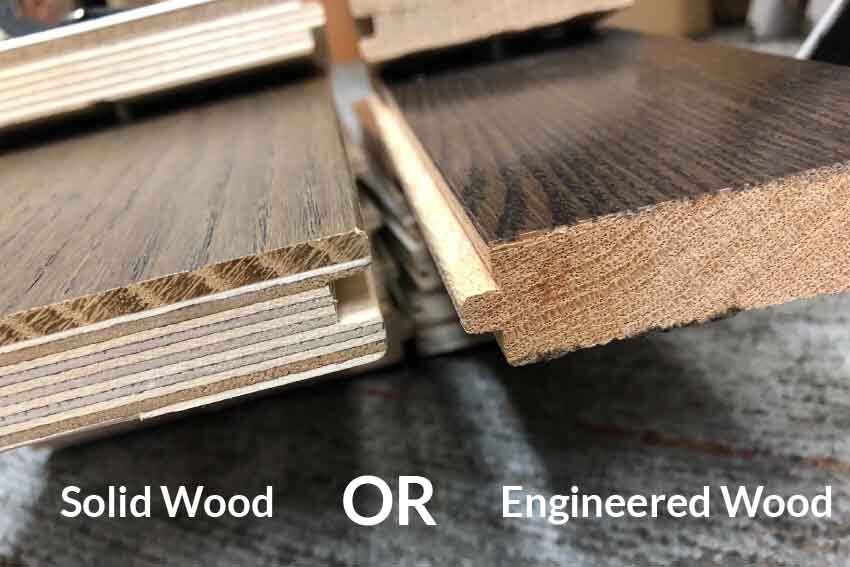
The choice between engineered wood and solid wood depends on the project rather than one material being universally better.
Factor | Engineered Wood | Solid Wood |
Manufacturing | Manufactured from wood components | Natural timber |
Consistency | Often more uniform depending on product | Natural variation |
Applications | Furniture, interiors and structural products depending on type | Furniture, joinery and other applications |
Design flexibility | Available in various engineered forms | Depends on timber species and design |
Moisture performance | Depends on grade and product | Depends on species, treatment and finish |
Cost | Varies by product and specification | Varies significantly by timber species |
Selection | Based on application and product specifications | Based on species, quality and intended use |
The comparison should be treated as a general guide. Individual products can have very different properties.
How to Choose the Right Engineered Wood Material
1. Identify the Application
First determine exactly where the material will be used.
Is it for a wardrobe, kitchen cabinet, office partition, door, shelf or structural component?
2. Consider Moisture Exposure
Dry areas, kitchens and wet areas can have different requirements. Select the grade appropriate for the environment.
3. Check Thickness and Dimensions
The required thickness depends on the design, span, load and application.
4. Review Product Specifications
Ask the supplier for technical information and applicable standards rather than relying only on marketing descriptions.
5. Consider Finishing Requirements
Think about whether the panel will receive laminate, veneer, paint, acrylic or another finish.
6. Work With Experienced Professionals
Architects, interior designers, contractors and experienced fabricators can help match the material to the application.
Common Mistakes to Avoid
Even high-quality engineered wood materials can perform poorly if they are selected or installed incorrectly.
Avoid these common mistakes:
- Choosing the same plywood grade for every room
- Ignoring moisture exposure
- Selecting thickness only based on price
- Failing to check product specifications
- Storing panels in unsuitable conditions
- Using inappropriate adhesives or fasteners
- Ignoring edge protection where necessary
- Depending only on surface appearance to judge quality
- Overlooking installation workmanship
Material selection should always consider the complete application rather than one characteristic in isolation.
Why Enduraply Can Be Considered for Interior Projects
For homeowners, interior designers, architects and contractors looking for plywood solutions, Enduraply provides a range covering MR plywood, BWP plywood and block boards.
Its current product range includes Express MR Plywood, Gold Grade MR Plywood, BWP 303 Gold Grade, Diamond Grade MR Plywood, BWP 710 Diamond Grade and Pine MR Block Board.
The company’s product-selection guidance also matches different plywood categories with applications such as wardrobes, study tables, kitchens, bathroom cabinets, doors, partitions and long shelves.
For buyers in RT Nagar, Bengaluru, Karnataka, the most useful approach is to discuss the project requirements directly and select a product based on its intended application, moisture exposure, dimensions and performance specifications.
You can explore the range through Enduraply’s official website or contact the team for product guidance.
Engineered Wood for Home and Commercial Interiors: Making the Right Choice
The benefits of engineered wood go beyond simply replacing solid timber. Different engineered wood products are designed for different requirements, offering options for furniture, interiors and construction applications.
The seven key advantages discussed in this guide include:
- Consistent and predictable performance
- Design flexibility
- Application-specific product choices
- Dimensional accuracy
- Practicality for furniture and interiors
- Options designed for moisture-exposed applications
- Suitability for modern residential and commercial designs
The most important consideration is not simply choosing engineered wood, but choosing the right engineered wood product for the right application.
For a residential renovation, office project, retail interior or commercial fit-out, discuss the required specifications with your designer, contractor or plywood supplier before making a purchase.
Conclusion
Engineered wood has become an important material category for modern home and commercial interiors because it offers a range of manufactured wood solutions suited to different applications. From furniture and wardrobes to kitchens, partitions and commercial interiors, the right product can support practical and design requirements.
For projects in Bengaluru, RT Nagar and across Karnataka, Enduraply provides a range of plywood and block board solutions designed for different interior applications. The right selection should always be based on the project’s moisture conditions, design, thickness, expected use and applicable product specifications.
If you are planning a new interior project and need help selecting a suitable plywood solution, Contact Us at Enduraply to discuss your requirements.
I. FAQ Section
1. What is engineered wood?
Engineered wood is a broad category of manufactured wood products made by combining or restructuring wood elements such as veneers, fibres or strands. Different products are designed for different applications. Plywood is one example of an engineered wood product, while other categories include OSB, glulam and structural composite lumber.
2. Is plywood an engineered wood product?
Yes. Plywood is generally considered an engineered wood product because it is manufactured by bonding layers of wood veneer together to create a panel with defined characteristics. However, plywood products can differ significantly in grade, construction, thickness, moisture resistance and intended use.
3. Is engineered wood suitable for home interiors?
Engineered wood products can be suitable for many home interior applications, including wardrobes, furniture, shelving and kitchen cabinetry, depending on the specific product. The appropriate grade should be selected according to the environment, expected use, moisture exposure and design requirements.
4. Can engineered wood be used for commercial interiors?
Yes. Depending on the product, engineered wood can be used for office furniture, partitions, reception counters, retail fixtures, hospitality furniture and other commercial interior applications. Product selection should consider expected loads, moisture exposure, dimensions, finishing requirements and relevant technical specifications.
5. Is engineered wood waterproof?
Not all engineered wood products are waterproof. Moisture resistance varies according to the product, grade and manufacturing specification. For areas exposed to significant moisture, buyers should select a product specifically designed and rated for that environment rather than assuming that all engineered wood has the same water resistance.