
Introduction
Choosing the right plywood for modular kitchen cabinets is an important decision for interior designers because kitchen furniture faces conditions that many other interiors do not. Steam, humidity, accidental spills, cleaning, sink-area moisture and everyday opening and closing can all influence the long-term performance of kitchen cabinetry. The right plywood should therefore be selected based on the application, moisture exposure, thickness, dimensional stability, finishing requirements and construction method not simply on price or appearance. For designers working on residential and commercial interiors in Bengaluru, understanding the difference between moisture-resistant and waterproof plywood can make material selection more practical and specification-driven. EnduraPly offers both MR and BWP plywood options, including calibrated BWP products intended for moisture-prone applications. This guide explains the key factors to consider when selecting plywood for modular kitchens and how to approach product selection for different kitchen zones.
Why Plywood Selection Matters in a Modular Kitchen
A modular kitchen is more than a collection of attractive cabinets. The boards underneath laminates, veneers or other finishes form an important part of the cabinet structure.Poorly matched or unsuitable plywood can create problems such as: Swelling after moisture exposure Delamination Warping or dimensional changes Difficult installation Weak screw or hardware fixing Uneven surfaces Problems around sink and wet zonesHowever, plywood grade is only one part of the equation. Cabinet design, edge sealing, installation quality, hardware, exposure and maintenance also influence the final performance.This is why interior designers should assess the complete kitchen application before specifying a board.
What Is the Best Plywood for Modular Kitchen?
There is no single plywood product that is automatically the best for every kitchen component.However, areas exposed to water or regular moisture generally require a higher level of moisture protection than dry indoor furniture.For many modular kitchen applications, BWP plywood is an important option to consider, particularly for: Base cabinets Sink cabinets Cabinets close to plumbing Utility areas Moisture-prone storage sectionsEnduraPly's product selection guide specifically recommends BWP plywood for modular kitchens, bathroom cabinets, utility storage and sink-area units.The final specification should still depend on the individual project, cabinet construction and expected exposure.
MR vs BWP Plywood for Modular Kitchen
One of the most common decisions designers face is whether to use MR or BWP plywood.
BIS identifies IS 303 as the standard for plywood for general purposes, while IS 710 covers marine plywood. The current BIS compendium also lists the 2024 revisions of these standards.For a project where a specific BIS standard is required, designers should verify the current product marking and documentation rather than relying only on terminology such as “waterproof” or “marine”.
7 Factors to Consider When Choosing Plywood for Modular Kitchen
1. Moisture and Water Exposure
The first question should be: Where will the plywood be installed?A kitchen contains several exposure zones. A cabinet near a dry pantry area may experience significantly less moisture than a cabinet beneath the sink.For high-exposure locations, BWP plywood can be a more appropriate material to consider.This is particularly relevant for: Sink units Base cabinets Plumbing-adjacent storage Utility kitchens Areas exposed to frequent cleaningEnduraPly's BWP range is positioned for kitchens and other moisture-prone interior applications.
2. Plywood Grade and Applicable Standard
Don't select plywood based solely on labels used in marketing.Check: Product grade Applicable BIS standard Product markings Manufacturer documentation Thickness Intended applicationBIS's current documentation covers plywood standards including IS 303:2024 for general-purpose plywood and IS 710:2024 for marine plywood.If a project specification requires a particular standard, the supplied material should be checked against that requirement.
3. Thickness
Kitchen components do not necessarily have identical structural requirements.The appropriate thickness can depend on: Cabinet dimensions Span Hardware Load Shutter design Installation method Location of the panelEnduraPly's BWP 710 Diamond Grade is currently listed in 6, 9, 12, 16 and 19 mm thicknesses.Rather than specifying one thickness across an entire project automatically, designers should select according to the component and structural requirement.
4. Calibration and Dimensional Accuracy
Calibration can be particularly useful in modular furniture because consistent thickness supports accurate cutting, joining and installation.A calibrated plywood panel can help with: Consistent cabinet dimensions Cleaner edge finishing More predictable installation Accurate hardware fitting Better surface preparationEnduraPly's Gold Grade MR and BWP 710 Diamond Grade are described as calibrated products with uniform thickness.For designers working with CNC cutting or precision furniture production, dimensional consistency should be part of the material-selection discussion.
5. Strength and Dimensional Stability
Kitchen cabinets carry dishes, appliances, utensils and stored goods. The plywood should therefore be suitable for the expected structural and functional requirements.Consider: Cabinet size Shelf span Expected load Hardware type Fixing method Panel orientation Support structureA strong board alone cannot compensate for poor cabinet design or inadequate support.The material and construction system should work together.
6. Finishing Requirements
Plywood is normally covered or finished with materials such as: Laminate Acrylic Veneer Paint Other decorative finishesThe quality and consistency of the plywood surface can influence finishing and installation.For interior designers, it is useful to consider how easily the selected plywood can be cut, edge-finished and integrated into the intended design.
7. Manufacturer Support and Product Availability
Material selection becomes easier when the manufacturer can provide clear information about: Grades Thicknesses Product applications Standards Availability Technical specifications Project requirementsEnduraPly has an established product range covering MR plywood, BWP plywood and block boards. The company states that it has operated since 2012 and has supplied products for residential and commercial applications.For designers managing multiple projects, dependable product information can be as important as the product itself.
Choosing Plywood Based on Different Kitchen Zones
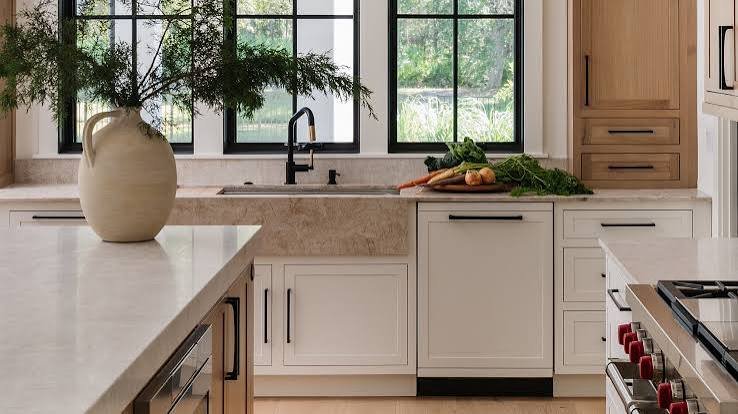
A practical way to specify kitchen plywood is to divide the kitchen into application zones.
These are starting points rather than universal specifications. The final selection should consider cabinet construction, exposure, span, load and installation conditions.
Why BWP Plywood Can Be a Practical Choice for Kitchen Projects
BWP, or Boiling Waterproof plywood, is designed for applications where greater resistance to water and moisture is required.For a modular kitchen, this can be especially relevant because accidental spills and plumbing-related moisture cannot always be completely avoided.EnduraPly currently offers BWP 303 Gold Grade and BWP 710 Diamond Grade as waterproof plywood options. Its BWP 710 Diamond Grade is described as a calibrated waterproof plywood with uniform thickness and enhanced bending resistance.The correct product should still be matched to the specific design and exposure conditions.
EnduraPly Plywood Options for Kitchen Applications
For interior designers evaluating plywood for modular kitchen projects, EnduraPly provides multiple grades rather than a one-product-fits-all approach.
BWP 303 Gold Grade
This is positioned as a calibrated waterproof plywood for modern construction and interior requirements. EnduraPly specifically lists BWP plywood for modular kitchens and other moisture-prone applications.
BWP 710 Diamond Grade
EnduraPly describes BWP 710 Diamond Grade as premium calibrated waterproof plywood with uniform thickness and enhanced bending resistance. It is listed in multiple thicknesses for residential and commercial interiors.
MR Plywood
For sections of an interior project that have limited moisture exposure, MR plywood can be considered where appropriate. EnduraPly's MR range includes calibrated options intended for dry interior and furniture applications.
Common Mistakes When Selecting Kitchen Plywood
Choosing only by price
The cheapest board may not be the most appropriate choice for a moisture-prone kitchen area.
Using the same grade everywhere
Different cabinet sections can face different moisture and structural conditions.
Ignoring thickness
Thickness should be selected according to the component, span, loading and construction method.
Assuming “waterproof” solves every problem
Even suitable BWP plywood needs proper design, edge treatment, finishing and installation.
Not checking product documentation
For specified projects, confirm the applicable standard, grade and product marking.
Ignoring installation quality
Poor joints, exposed edges and water leakage can affect kitchen furniture regardless of the plywood grade.
Practical Tips for Interior Designers
Before finalising the plywood specification, create a simple material checklist: Identify dry and moisture-prone kitchen zones. Determine the expected load on each cabinet component. Select the appropriate grade for each application. Confirm thickness requirements. Check whether calibrated plywood is beneficial for the project. Verify the relevant product standard and documentation. Plan edge protection and finishing carefully. Coordinate plywood selection with hardware and cabinet construction. Confirm product availability before finalising the material schedule. Request technical/product guidance when the application is unusual or demanding.For large residential, hospitality or commercial projects, designers may also benefit from discussing the specification directly with the manufacturer or supplier.
Who Should Consider Waterproof Plywood for a Modular Kitchen?
BWP plywood is particularly worth considering for: Homeowners building new modular kitchens Interior designers specifying premium kitchen interiors Contractors executing moisture-prone cabinetry Architects preparing detailed material schedules Commercial kitchens and utility areas Projects with sink-side or plumbing-adjacent cabinetsFor dry sections where water exposure is limited, an MR product may be sufficient depending on the design and specification.The objective should be application-based material selection, not simply choosing the highest grade everywhere.
When Should You Seek Professional Product Guidance?
Professional guidance can be useful when: The kitchen has unusual dimensions Large spans are involved Heavy appliances are integrated The project has demanding moisture conditions Specific BIS standards are required A commercial project requires documented specifications You need help selecting between grades and thicknessesAn interior designer should also verify the manufacturer's current technical documentation before finalising project specifications.
Why Bengaluru Interior Designers Should Think Beyond the Board
Bengaluru kitchens can be designed for a wide range of homes, apartments, offices and commercial environments. The correct plywood specification should therefore be based on the actual project rather than assuming that every kitchen has identical conditions.Factors such as ventilation, plumbing layout, cabinet positioning, cleaning practices, installation quality and expected usage can all influence material selection.For designers sourcing plywood for projects in Bengaluru, working with a supplier that provides clear product specifications can simplify the specification and procurement process.EnduraPly offers plywood solutions for kitchens, furniture, wardrobes and commercial interiors and provides product guidance for project-specific requirements.